

The total cumulative fine sets a limit on the maximum fines a student can be charged in an academic year.
How It Works
- It includes paid fines (already paid) and active fines (still unpaid).
- The limit applies to all fines during the whole academic year.
- It stops calculating once reached to maximum set limit.
- It ensures fairness for students.
- The limit is set for each student individually.
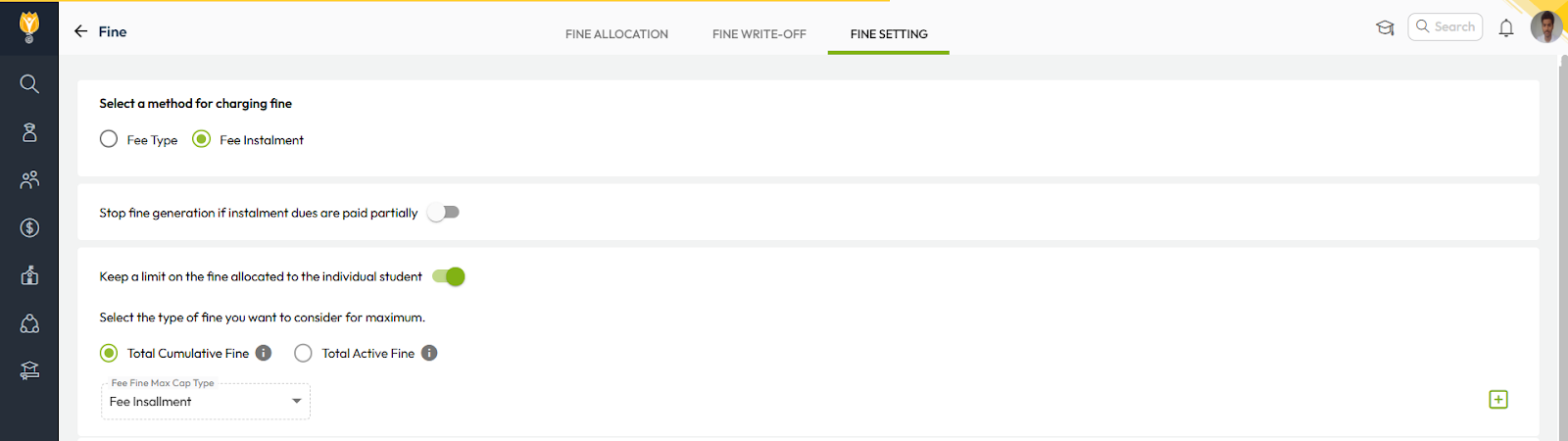
Real-Time Example
A school has set the total cumulative fine limit at ₹500 for the academic year.
- Fine Instances:
- June: A late payment fine of ₹200 is charged to a student for missing the tuition fee due date.
- August: The student receives another fine of ₹150 for a cheque bounce.
- October: A late fine of ₹200 is added again due to another fee delay.
- Cumulative Fine Tracking:
- Total fines so far:
₹200 (January) + ₹150 (February) + ₹200 (March) = ₹550.
- Total fines so far:
- Enforcement of the Fine Limit:
- The total cumulative fine limit for the academic year is ₹500.
- Since the student’s cumulative fine has reached ₹500, no additional fines will be applied, even if the student incurs further delays in payment.
- If the school tries to apply another fine, the system will block it, ensuring fairness and compliance with the defined limit.
Was this article helpful to you?
Yes1
No2